Introduction: AI-Friendly Content in 2026
Artificial intelligence is changing the way businesses create, discover, and distribute content. From generating ideas to analyzing audiences, AI tools have become valuable resources for digital marketers. However, creating content that is simply optimized for machines is not enough.
People still want content that feels genuine, useful, and easy to understand. This is why businesses need to learn how to create AI-friendly content without losing the human touch.
The goal is not to choose between AI and human creativity. Instead, marketers can combine technology with originality, experience, and empathy to create content that works for both search systems and real people.
What Is AI-Friendly Content?
AI-friendly content is content that is structured and written in a way that makes it easy for modern search and AI systems to understand.
This can include clear headings, direct answers, relevant keywords, useful examples, frequently asked questions, and well-organized information.
However, AI-friendly does not mean robotic. Content should still have a clear purpose and provide genuine value to the audience.
For example, instead of filling an article with repetitive keywords, a business can answer real customer questions with simple explanations, examples, and practical solutions.
1. Start With Your Audience
Before using AI tools, understand who you are creating content for. Identify your audience’s problems, questions, interests, and search behavior.
Ask yourself:
- What information does my audience need?
- What problem am I helping them solve?
- What questions are they likely to ask?
- What would make this content genuinely useful?
Audience research gives your content a human foundation before technology enters the process.
2. Use AI as an Assistant, Not a Replacement
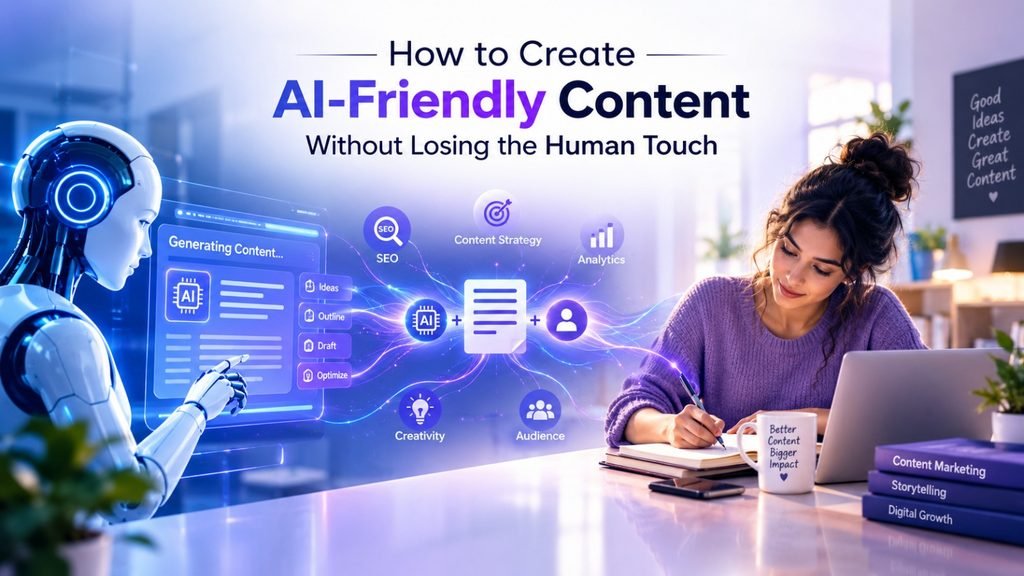
AI can help marketers brainstorm topics, create outlines, analyze keywords, summarize research, and improve productivity. But relying completely on AI can make content feel generic.
Use AI to support your workflow rather than replace your own ideas and experience.
Add your personal insights, examples, observations, opinions where appropriate, and practical knowledge. These elements can make content more distinctive and valuable.
3. Write Naturally and Clearly
One of the easiest ways to create better AI-friendly content is to write naturally.
Avoid unnecessary jargon, excessive keyword repetition, and complicated sentences. Use descriptive headings and short paragraphs to make information easier to scan.
Instead of writing for algorithms, write for the person who will actually read the page.
Natural language can also make your content easier to understand across different search and AI experiences.
4. Add Original Insights and Examples
Generic information is everywhere online. Original insights can help your content stand out.
Include real examples, case studies, processes, comparisons, statistics from reliable sources, or lessons from your own experience.
For a digital marketing agency, instead of simply explaining social media marketing, you could show how a small business might use Instagram content to attract local customers.
Practical examples make information more memorable and useful.
5. Make Your Content Easy to Understand
Structure matters. Use H2 and H3 headings, bullet points, short sections, FAQs, and descriptive titles where appropriate.
Answer important questions directly before expanding on the topic. This makes your content easier for readers to navigate and easier for search systems to interpret.
However, avoid creating structure simply for algorithms. Every heading and section should serve a clear purpose.
6. Keep the Human Voice
The biggest difference between ordinary AI-generated content and strong digital content is often the human perspective.
Use a consistent brand voice. Tell stories when relevant. Show empathy toward your audience’s problems. Explain concepts in your own style.
AI can help produce information, but human creativity gives content personality.
Conclusion
Creating AI-friendly content does not mean removing the human element from digital marketing. The most effective approach is to combine AI’s efficiency with human creativity, expertise, and understanding.
Use AI for research, brainstorming, organization, and productivity, but add your own perspective and experience. Focus on useful information, natural writing, clear structure, and genuine audience needs.
In 2026, the strongest content strategy is not simply about creating more content. It is about creating better content that both technology and people can understand, trust, and value.