Digital marketing is becoming more data-driven, but the way businesses collect and use customer information is changing. As privacy expectations increase and marketers look for more reliable insights, first-party data has become an increasingly important part of modern marketing strategies.
Instead of depending heavily on third-party information, businesses can build their own valuable data assets by developing direct relationships with their audiences. In 2026, having a strong first-party data strategy can help brands create more relevant experiences while building long-term customer trust.
What Is First-Party Data?
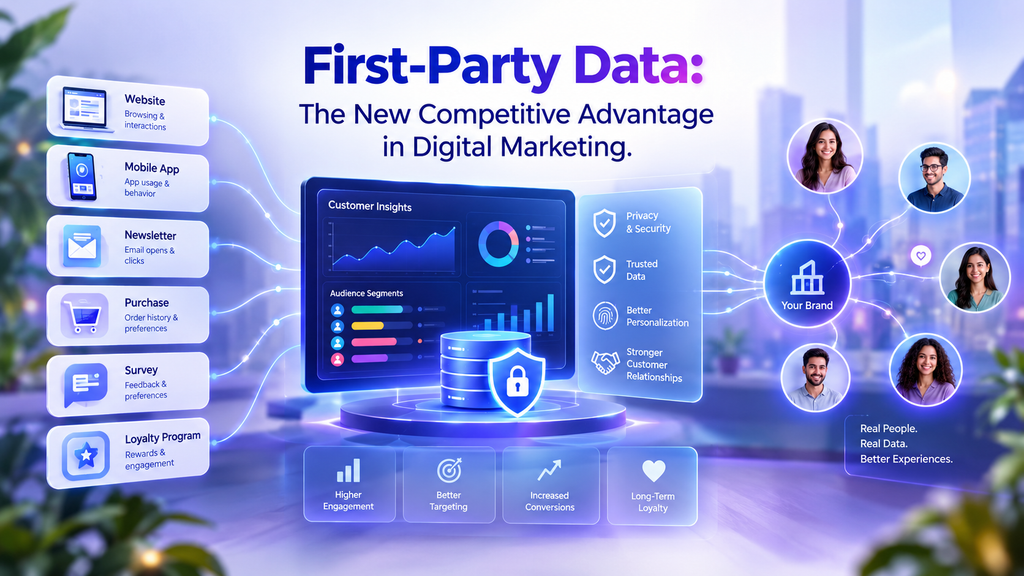
First-party data is information that a business collects directly from its own customers or audience through its digital channels.
This can include information from website interactions, purchases, newsletter subscriptions, customer forms, app activity, surveys, loyalty programs, and direct interactions with a brand.
Unlike data purchased or collected indirectly from other sources, first-party data comes directly from people interacting with the business. This makes it particularly useful for understanding existing customers and improving marketing decisions.
Why Is First-Party Data Important in 2026?
Privacy and transparency have become important considerations for digital businesses. Customers increasingly want to know how their information is collected and used, while marketers need dependable data to understand audience behavior.
A well-planned first-party data strategy allows businesses to develop insights from their own customer relationships instead of relying entirely on external platforms.
For example, an online store can analyze which products customers view, purchase, or add to their wishlist. A service business can use website inquiries and customer feedback to understand which services generate the most interest.
Benefits of First-Party Data for Businesses
1. Better Customer Understanding
First-party data can help businesses understand customer interests, preferences, and interactions with their own brand. These insights can support more relevant campaigns and content.
2. More Personalized Marketing
When customers voluntarily provide useful information, businesses can create more relevant communication. Personalized emails, product recommendations, offers, and website experiences can improve the customer journey.
3. Stronger Customer Relationships
Collecting information directly through transparent interactions can help businesses build stronger relationships with their audience. Trust becomes an important part of the data exchange.
4. Better Marketing Decisions
First-party data can provide businesses with insights into what is actually happening across their own customer journey. Marketers can use these insights to evaluate campaigns, identify opportunities, and improve their strategies.
How to Build a First-Party Data Strategy
Businesses do not need complicated systems to start collecting useful first-party data. The process can begin with simple, valuable customer interactions.
Create useful website forms, encourage newsletter subscriptions, collect customer feedback, develop loyalty programs, and provide meaningful reasons for customers to share information.
It is also important to communicate clearly about how customer information is collected and used. Businesses should follow applicable privacy laws and maintain responsible data practices.
Most importantly, focus on value exchange. Customers are more likely to share information when they receive something useful in return, such as personalized recommendations, helpful content, exclusive benefits, or a better customer experience.
First-Party Data and the Future of Digital Marketing
The future of digital marketing is not simply about collecting more information. It is about collecting useful information responsibly and turning it into better customer experiences.
As digital platforms continue to evolve, businesses that develop direct relationships with their audiences can create a stronger foundation for data-driven marketing.
First-party data can support SEO, email marketing, social media campaigns, advertising, content strategy, and customer retention. When combined with analytics and a clear privacy-first approach, it can become a valuable long-term marketing asset.
Final Thoughts
First-party data is becoming an important competitive advantage in digital marketing. Businesses that understand their customers directly, provide genuine value, and use information responsibly can make more informed marketing decisions while strengthening customer relationships.
In 2026 and beyond, successful digital marketing will not only be about reaching more people. It will also be about understanding the right audience, earning their trust, and creating meaningful experiences.